

|
Kottayam is a compound word -Kotta + Akkam which means the interior of a fort. Rulers of Munjanad and Thekkumkur had their head quarters at Thazhathangadi in the present Kottayam Town. Marthanda Varma of Travancore attacked Thekkumkur and destroyed the palace and the Taliyil fort. The remnants of palaces and forts are still seen here. |
||||
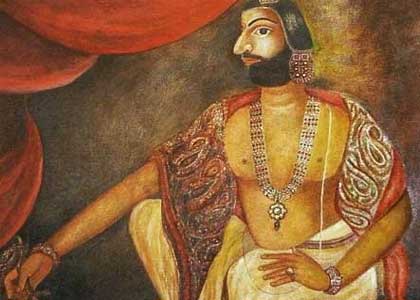
HISTORY At the time of integration of the State of Travancore and Cochin in 1984, these revenue divisions were renamed as districts and the Divan Peshkars gave way to District Collectors, marking the birth of Kottayam District. The beginning of of the 9th century A.D. is the age of Kulashekaras. At that time, Kottayam was a part of the Kulashekara Empire (1090-1102 A.D). The Vembanad Lake itself derives its name from Vempolinad. The Kingdom of Vempolinad, split itself into kingdoms of Thekkumkur and Vadakkumkur by about 1100 A.D. and later these two kingdoms were annexed by Marthanda Varma of Travancore (between 1748 and 1754). The Portuguese and the Dutch had their business relations with both Thekkumkur and Vadakkumkur kingdoms, pepper and other spices being the main attractions. In addition to Thekkumkur and Vadakkumkur, Marthanda Varma brought two more pretty principalities in Kottayam under his control. These were Poonjar and Meenachil. After Marthanda Varma, Dharma Raja (1758-1798) placed Kottayam in a key position in the new defense strategy against Haider Ali and Tippu Sulthan of Mysore. Apart from this, Kottayam afforded asylum to a number of refugee princes who left Malabar in the wake of Mysore invasions. Kottayam occupied a pre-eminent position in the cultural life of the Travancore princely court, the main reason being the migration of Ramapurathu Warrier, the famous poet of Vadakkumkur, to Triruvananthapuram , following the annexation of Kottayam by Marthanda Varma. Kottayam has played its role in all the political agitation of modern times.The "Malayali Memorial" agitation may be said to have had its origin in Kottayam. The Malayali Memorial sought to secure better representation for educated Travancoreans in Travancore civil service aganist persons from outside. The memorial that was presented to Maharaja Sri Mulam Thirunal (1891) was drafted at a public meeting held in Kottayam Public Library. The event marked the beginning of the modern political movement in the state. It was here that the famous Vaikom Satyagraha, (1924-25) an epic struggle for eradication of untouchability, took place. Scheduled castes and other backward classes in Travancore were not only denied entry into temples, but also access to temple roads. Vaikom, the seat of a celebrated Siva Temple, was the venue of the symbolic Satyagraha. It is of immense historic significance that national leaders like Mahatma Gandhi, C.Rajagopalachari, Acharaya Vinoba Bhava and E.V.Ramaswami Naykar, associated with this struggle. The Nivarthana agitation of the early thirties, to secure adequate representation for the non-caste Hindus, Christians and Muslims in State Legislature, enjoyed considerable support from this district. The district was also a centre of the agitation led by the State Congress for responsible Government in Travancore. The agitation had a triumphant end, with overthrow of Sir. C. P. Ramaswami Iyer, the then Divan of Travancore. |
||||
CULTURAL CONTRIBUTIONS Kottayam has its place of honour in the cultural map of Kerala. Kunchan Nambiar, the father of Thullal, a popular temple art form, was supposed to have lived at Kidangoor. Unnineeli Sandesam, the exquisite Malayalam poetical work, is supposed to have been written by one of the Vadakkumkur Rajas. Ramapurathu Warrier (1703-53) is one of the celebrated names in Malayalam literatures. |
||||
POPULATION There is a total population of 1828271 according to the Census of 1991. Male population is 9,12,860 and female population is 9,15,411. The density of population is 830 sq.km. The number of occupied residents houses in rural is 2,98.104 and in urban area is 61781. The number of workers come to about 4.5 lakh. |
||||
INDUSTRIES The growth Kottayam has achieved in the industrial sector during the past few years, is considerable. Now there are 11 large and medium small scale industries, 12 mini industrial estates and 12000 small scale industrial units. Significant growth has been achieved in the agro based industrial sector. The increasing output in Rubber Production and the advent of modern processing techniques, has resulted in the establishment of Rubber based industrial units like Latex, Crepe Rubber and Latex diversifying into items such as M.C. Sheets, footwear, etc. There is a major industrial estate for Rubber and Plastics at Changanassery. The Travancore Cement factory, which manufactures the unique white cement, is located at Nattakom, not far from the town. The district has a rich forest wealth with good availability of soft wood and other varieties of timber. As a result many industries like plywood, packing cases, splints and veneers, furniture,..etc are thriving. The Hindustan Paper Corporation has set up a factory at Velloor in Vaikom Taluk, for the production of News Print . The coir industry in Kottayam district is more or less confined to Vaikom Taluk. |
||||
AGRICULTURE Agriculture forms the livelihood of the majority in the district. It is also the main factor influencing the economy. Food crops as well as cash crops are cultivated here. |
||||
|
||||
|
||||
|
||||
| Coconut, another important, cash crop, has a total area of 46012 hectares under cultivation. Production is being raised by adopting modern farming methods, enhancing irrigation facilities and distributing quality seedlings. | ||||
OTHER CROPS Pepper, Tea, Coffee, Ginger, Arecanut, Pulses, Plantains, Pineapple, Sugarcane, Cocoa,.. etc are also cultivated in this district. The area under cultivation in hectares, is as below. (average production kg./ha. is in brackets) Pepper 10546 (1910) /Mango 2442, Banana 2370 Plantain 3251 cashew 1011 vegetables 11620, Fruits 11272 (3500). There are 74 Krishi Bhavans under the Dept. Of Agriculture in the district. |
||||
ANIMAL HUSBANDRY The main species of livestock in the district are cows, buffaloes, goats and pigs. Majority of the cattle still found in the district are Rangayam, Hallikyr and cross breeds of Jersey, Sindhi and Swiss Brown. Following the introduction of the artificial insemination schemes and intensive cattle development projects of the Animal Husbandry Department, there is a fairly large number of cross-bred Jersey and Swiss Brown animals here. Two other breeds found here are Murrah and Surabhi. The goat population consists of Kalabari, a few cross breeds of Jamanapari and the local breeds. Fowls, Ducks, Turkey,.. etc form the poultry. There are 11 veterinary hospitals, 4 veterinary polyclinics 43 dispensaries and 3 mobile farm aid units in this district. 69 artificial insemination centres, one poultry farm and two pig breeding units are also functioning here. |
||||
FISHERIES Deprived of a sea coast, but abundant in lakes &rivers, inland fishing flourishes here, providing livelihood to around 5000 families. To popularise inland fishing, various programmes are being implemented for giving addistance to fish growers. Fingerlings of new varieties of fish like Catla, Rohu, etc. Are distributed to the farmers according to the suitability of their ponds. Farmers are also given Government subsidy. |
||||
RIVERS The important rivers of the district are the Meenachil River, the Muvattupuzha River and the Manimala River. The Meenachil River flows through the taluks of Meenachil, Vaikom and Kottayam. It is formed by several streams originating from the Western Ghats in Idukki district. At Erattupetta, Poonjar River also joins it, takes a sharp turn and flows towards the west. At Kondur, it is joined by the Chittar and at Lalam it receives the payapparathodu and flows in a south-west direction till it reaches Kottayam. Here, it branches into several streams before emptying into the Vembanad Lake.The important towns in the basin are Pala, Poonjar, Ettumanoor and Kottayam. The Muvattupuzha river originates from Ernakulam district, flows through Vaikom taluk and empties into the Vembanad lake the most important town in the basin is Vaikom the famous pilgrim centre. The Manimala River flows through Kanjirappally and Changanacherry taluks. The Chittar joins it on its course further down the west as it flows to Alapuzha district. The important town in the basin is Mundakayam. |
||||
FORESTS Forest plays an important role in the economic development of the
district by influencing various sectors like Agriculture, Industry, Employment, Climate,..
etc. |
||||
CLIMATE The district has a tropical humid climate with an oppressive hot season in the plains and plenty of rainfall throughout . The hot season from March to May, is followed by the South-West Monsoon from June to September.October and November constitute the post-Monsoon or retreating Monsoon season, when day temperature increases gradually and the heat is nearly as intense as in summer. December to February forms the North-East Monsoon. Rains cease early in January. |